NASA seeks industry partners to design Lunar Reactor-1, a nuclear power plant for the Moon
The agency wants a launch-ready 20-kilowatt fission system by 2030 that can run on the lunar surface for at least five years.
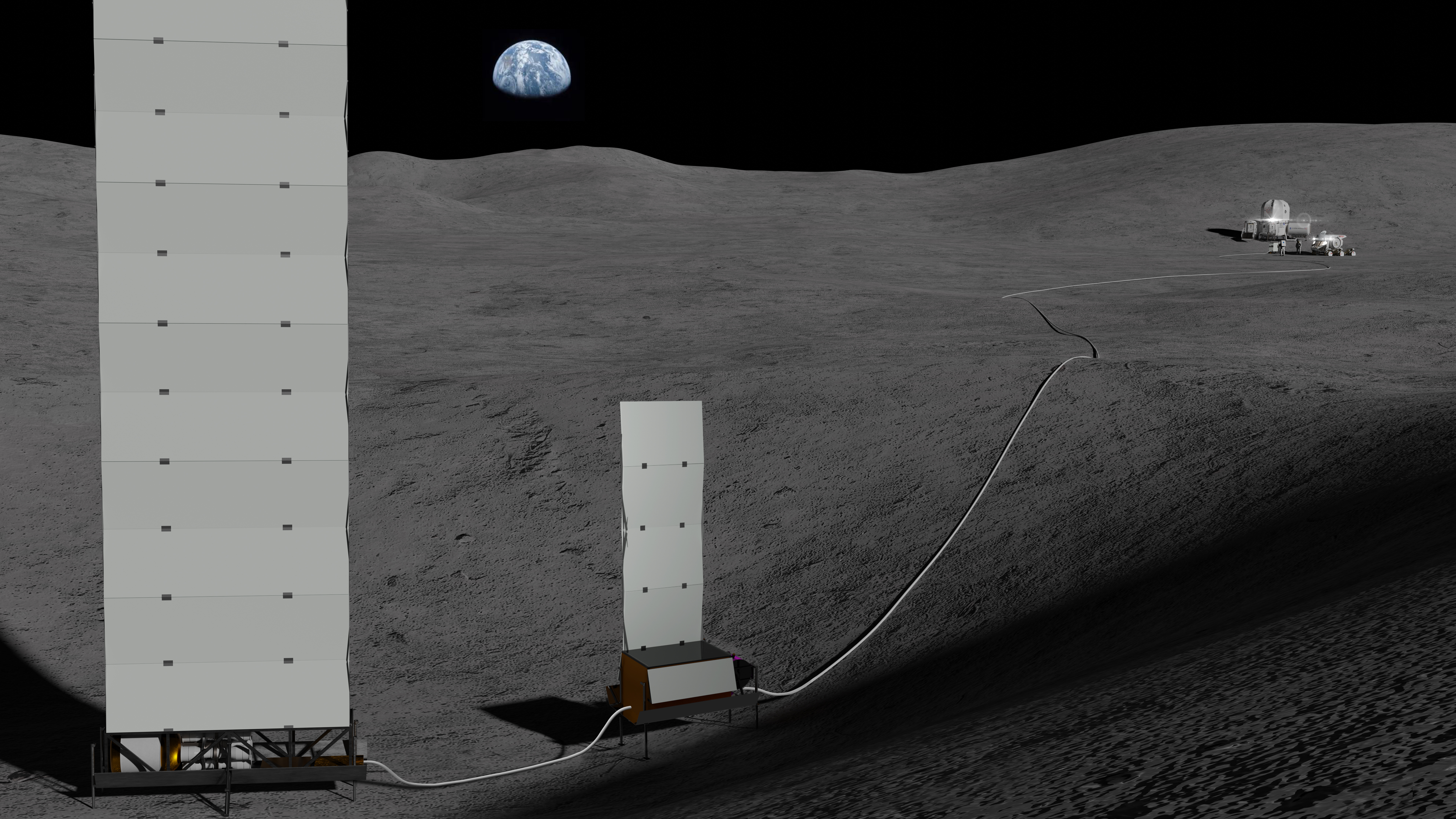
NASA has asked industry to propose designs for Lunar Reactor-1 (LR-1), a small fission power system intended to supply electricity on the Moon, with proposals due by December 21.
The reactor would generate 20 kilowatts, which NASA said is enough to power about 16 average U.S. households annually on Earth. The agency said the power could support habitats, communications systems, rovers and scientific instruments at a planned Moon Base.
NASA aims to have a launch-ready system by 2030 and to operate it on the Moon for at least five years after deployment. The solicitation requires the reactor to meet Department of Energy (DOE) safety standards for nuclear operations.
Unlike solar power, a reactor can generate electricity continuously, including through lunar nights that last about 14 Earth days, NASA said. That would help in locations where sunlight is limited or unavailable.
"This request for proposals represents an important step forward as NASA partners with industry to establish an enduring human presence on the lunar surface," said Brian Giblin, NASA's Lunar Reactor-1 program manager.
The Space Power and Reactor Capabilities Request for Proposals incorporates feedback from a draft released in August and an industry day held in September at the Ohio Aerospace Institute in Cleveland. The main purpose is to advance the technology, testing and flight design of LR-1. NASA may also issue additional task orders for other space nuclear power systems.
LR-1 is managed by NASA's Space Reactors Division in partnership with the DOE. The same division is responsible for Space Reactor-1 (SR-1) Freedom, scheduled to launch in 2028. That mission will deliver three SkyFall helicopters to Mars and demonstrate nuclear electric propulsion, in which a reactor's electricity powers a spacecraft's propulsion.
Background
NASA said lunar nights last about 14 Earth days, while dust storms on Mars can block sunlight for months, and solar power becomes less effective farther from the Sun. The agency released a draft proposal in August and held an industry day in September before issuing the final request.
Why it matters
NASA says continuous power is needed for sustained operations on the Moon, including during lunar nights and in places without sunlight. The agency also links the technology to later exploration of Mars.
Sources
Reported from these outlets. The scale shows each outlet’s general leaning, from left to right.
- Leaning: Centre