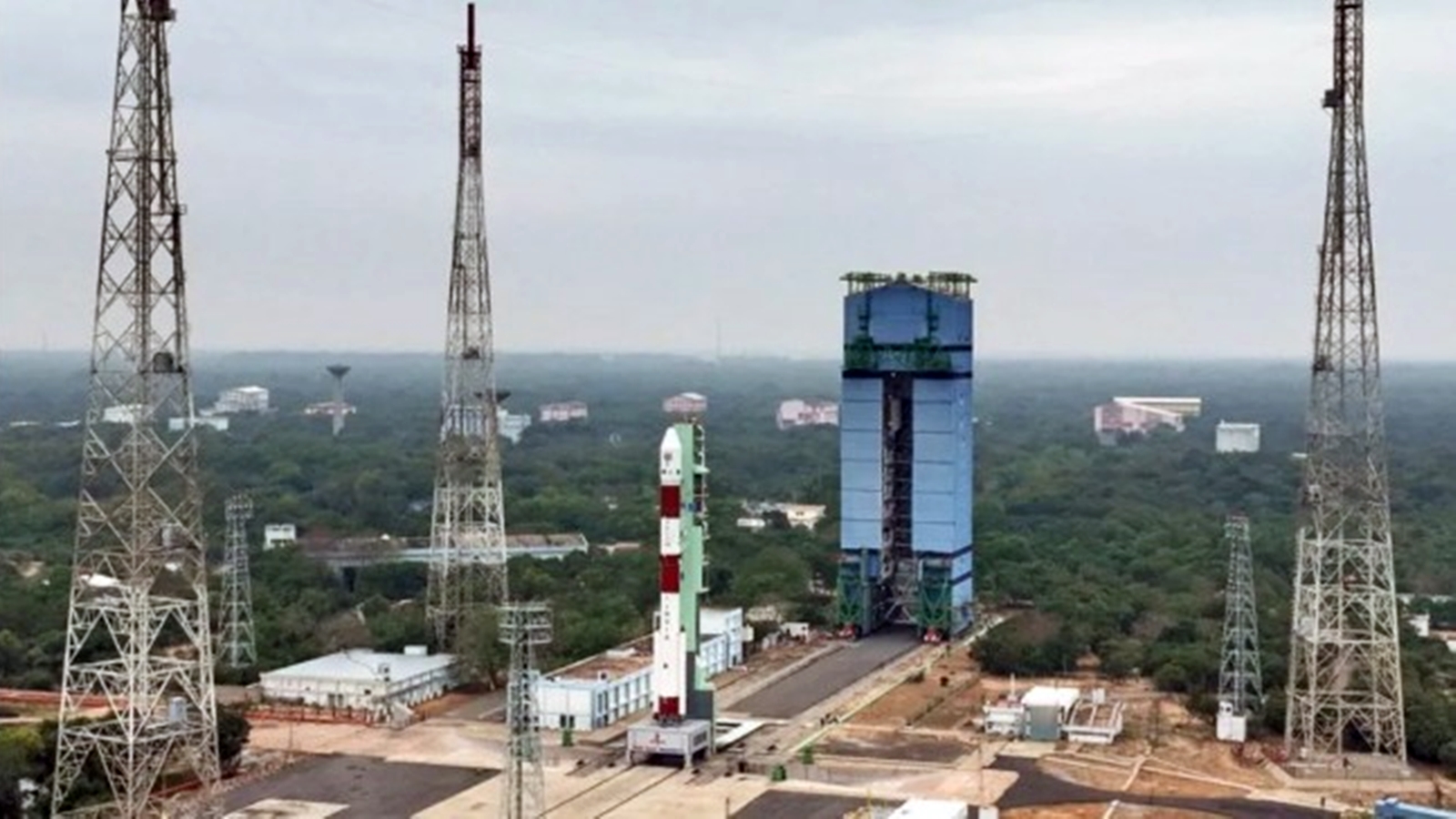
Maiden flight of privately built PSLV-N1 likely pushed to early 2027
The rocket, built by a HAL and L&T consortium, was to carry ISRO's EOS-10 earth observation satellite; at least two launches had been planned this year.
The maiden flight of the privately built PSLV-N1 rocket is likely to be pushed to early 2027, The Indian Express reported on Monday, extending a programme under which at least two launches had been planned this year.
The rocket was to carry ISRO's earth observation satellite EOS-10. It is being built by a consortium led by Hindustan Aeronautics Limited (HAL) and Larsen & Toubro (L&T).
A T Ramchandani, Senior Vice-President and Head of L&T Precision Engineering & Systems, said the delays result from issues such as coordination with the payload and the available launch window. He spoke at the India International Space Conclave.
According to the newspaper's sources, the vehicle is ready. They said the present delay stems from ISRO's caution after two successive failures of its PSLV. ISRO will likely clear the privately developed rocket only after its own PSLV flies successfully, the sources said.
One source said that after the setbacks, suppliers of certain components were changed on the recommendation of the failure assessment committee. "The changes have already been made to the PSLVs," the source said.
The two failures were PSLV-C61 on May 18, 2025 and PSLV-C62 on January 12, 2026. Both rockets developed anomalies in the third stage. ISRO maintains the causes were different, and sources said the problems have now been fixed.
The consortium won the contract in 2022 to make five PSLV rockets. The first vehicle was due within two years and the rest every six months, which would have meant delivery of all five by 2026.
Ramchandani also called at the conclave for a Space Components Mission covering space-grade electronics, sensors, propulsion, materials and mechanisms. He said that if India integrates systems domestically but imports radiation-hardened electronics, alloys and sensors, it remains exposed.
Separately, astronaut-designate Air Commodore Prasanth Balakrishnan Nair urged large Indian industrial groups to form a consortium for complex missions, including a human space mission. The first uncrewed Gaganyaan flight is likely later this year, with at least two more flights before a crewed one.
Background
The PSLV is ISRO's most used launch vehicle. Four of its flights have failed, including the first in 1993 and one in 2017 when the heat shield did not open. The 2022 contract set a first delivery in 2024.
Why it matters
The delay extends the timeline for India's first industry-built PSLV, which was meant to shift routine launch manufacturing to private hands under a five-rocket contract.
Sources
Reported from these outlets. The scale shows each outlet’s general leaning, from left to right.
- Leaning: Centre-left